
The Gulf nations are committed to greater involvement in Africa, but their differing approaches have sparked friction.
Last year, Saudi Arabia’s ambassador to the United Arab Emirates (UAE), Sultan bin Abdullah Al Anqari, said that “the UAE holds a special and cherished place in our hearts… the noble sentiments we experienced from our brothers in the UAE are a source of pride for us.” While the official line from Riyadh and Abu Dhabi is normally that the two countries are Arab “brothers”, in reality they have long been embroiled in a fierce geopolitical, economic and commercial rivalry that is often reflected in their differing approaches to the African continent.
Africa is increasingly the site of geopolitical competition, with global heavyweights such as the United States and China, as well as middle-ranking powers like Russia, France, Italy, South Korea and Japan, recognising the growing strategic importance of the continent.
With Africa holding approximately 30% of the world’s known critical mineral reserves, poised to represent more than a quarter of the world’s population by 2050, and home to some of the fastest-growing markets globally, it is unsurprising that many of the globe’s most powerful countries are dedicating more attention and resources to the continent.
Rival investor
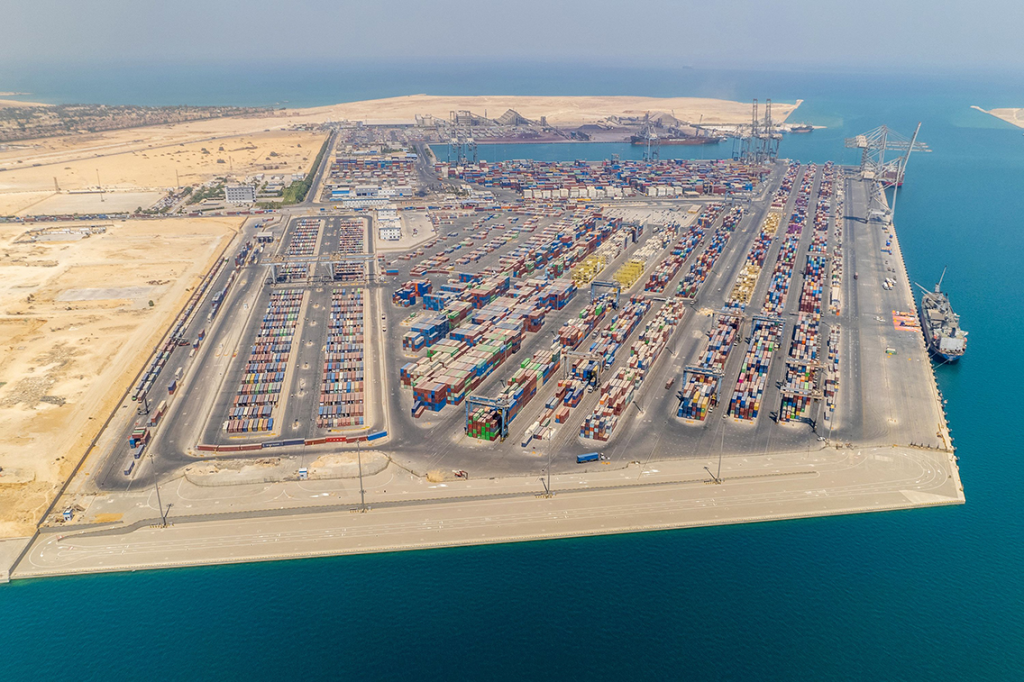
Amid this competitive backdrop, the UAE has emerged as by some measures the single largest investor in Africa. Between 2019 and 2023, Emirati companies announced $110bn worth of projects in Africa, with more than $70bn committed to renewable energy projects. The UAE has also invested heavily in African infrastructure – with the state-owned DP World managing six ports in Africa – as well as in agriculture, telecommunications, mining and more.
Cameron Hudson, who previously served as the director for African affairs in the White House and is now a political risk consultant at 54 Advisors in Washington DC, tells African Business that the growing dominance of the UAE in Africa is perceived as a potential risk in Riyadh.
He argues that the UAE’s investments in Red Sea ports – such as its plan (cancelled in 2024) to invest $6bn in the development of a port at Abu Amama in Sudan, extensive investments in Egyptian ports such as Safaga and Hurghada, as well as in Somaliland’s Berbera port – are designed to challenge Saudi Arabia’s power in the Middle East and further afield.
“At some point the UAE developed an ambition to be an equal and rival to Saudi Arabia in the broad region,” he says. “It does not want to be limited to the Arabian Gulf, its little corner of the world, but to project power on the Red Sea and on both Saudi Arabia’s eastern and western flank.
“The Red Sea has arguably become the most strategic and contested waterway in the world today. To be a regional power you have to have a military presence on that water and, to have a military presence, you need to have port access,” Hudson says.
Saudi Arabia currently lags behind the UAE in terms of investment in, and engagement with, Africa. In 2024, the Saudi Arabian finance minister announced that he expected Saudi investments in Africa’s private sector to reach around $25bn within a decade. As of 2023, total Saudi investments in Africa had surpassed $13bn, with the government saying that 47 Saudi companies were active on the continent. Hudson says that the success of the UAE compared to its neighbour can be attributed to the more “outwardly projected” development path which required it to develop many more commercial relationships overseas, including in Africa.
“If you go back twenty years, Saudi Arabia was doing a lot in Africa: they were building madrassas [religious schools], they were building mosques, they were supporting large African delegations to come on the hajj [pilgrimage] to Saudi Arabia,” he notes. “They were incredibly involved but in a way that was more socio-religious rather than financial.”
“Saudi Arabia’s Vision 2030, a strategic agenda for growth and development, was very internally focused: it was about reorientating the economy away from extractives and developing new parts of the domestic economy,” Hudson says.
“At the same time, the UAE pursued a starkly different approach, partly because the UAE is simply much smaller than Saudi Arabia: it is obviously very wealthy, but it has less territory and fewer people,” he notes. “Their development therefore required more outward investments and a greater external diplomatic effort.”
As a result of these different development models, Abu Dhabi has had a significant head start in expanding its influence across Africa, often in ways that Riyadh views as contrary to its national interest.
Difference on the Horn
David Shinn, a former US ambassador to Ethiopia, tells African Business that the two countries have in particular had differences of opinion across the Horn of Africa.
“It is very clear that the UAE has provided support for the RSF [the ‛Rapid Support Forces’ military faction] in Sudan, which was starting to cause a schism between the Saudis and the UAE because they were on the opposite sides of that battle,” he tells African Business. “They seem to be taking differing positions on Ethiopia-Eritrea, which could create further problems for their relationships. I am not entirely convinced they are on the same page in Somalia.”
“Even in Yemen, where they had the shared goal of supporting the same regime, they took a different approach, with the UAE relying heavily on RSF troops and Saudi using their own planes and money,” Shinn says.
Saudi Arabia has become more determined to counter the influence of the UAE in recent years, not least because Riyadh views the UAE’s willingness to back non-state actors – such as the RSF in Sudan – as undermining regional stability.
The economic significance of Africa in key industries, such as agriculture, also make it vital that Saudi Arabia is more proactive in shaping the agenda rather than allowing the UAE to do so unchallenged.
Opportunity in suspicion
Hudson suggests there could be an opportunity for Saudi Arabia to establish stronger relations on the continent, not only because of its ability to increase investment flows, but also because its Emirati rival is increasingly perceived with suspicion among some African publics.
“The Emiratis have taken a very interventionist approach to countries where they have invested; they try to shape political, military and security outcomes in ways that benefit their investment and national security objectives,” he tells African Business.
“It feels like a much more nakedly self-serving approach, and this has started to create frictions in a number of the countries where they have been operating.”
Hudson adds that the UAE, a signatory to the Abraham Accords which normalised relations between Israel and some Arab countries, is also seen by some African publics as overly close with Israel.
“There is a long-standing sympathy for the Palestinian cause across Africa,” he says. “The closeness of the relationship between the UAE and Israel, and frankly what people see as the UAE emulating aspects of Israeli foreign policy in their approach to the Horn of Africa, is not lost on African publics.”
“What is happening in Iran right now, and what has happened in Gaza over the last several years, makes this a much more important issue for African publics that I am not sure the Emiratis have fully appreciated yet.”
New embassies stalled
However, Benjamin Augé, researcher at the Africa Centre of the French Institute of International Relations (IFRI) in Paris, is sceptical that Saudi Arabia will be successful in overcoming the entrenched influence of the UAE on the continent. He tells African Business that “very few concrete efforts” have so far been made on Riyadh’s part to establish stronger political and economic relationships in Africa.
“The Saudi government was notably pushing to open new embassies in the SADC [Southern African Development Community] region to promote business relations in mining, for example, but civil servants are taking a relatively long time to implement these decisions,” Augé says.
Political vacancy
“There is also no longer a political figure capable of organising and shaping the country’s Africa policies, as there is no longer a state minister in charge of Africa relations, as there used to be with Ahmed bin Abdul Aziz Kattan and then Sami bin Abdullah Al-Saleh until 2023,” he adds.
While there is clearly more work for Saudi Arabia to do in Africa, there are signs that funding could be on the rise. In 2025 the Saudi-based Islamic Development Bank (IDB) signed an $800m financing deal with Uganda, which covered infrastructure and trade projects. In the same year IDB – which counts Saudi Arabia as its largest shareholder with 22.5% – also announced plans to lend $3bn to Algeria for development projects over three years. Whether such initiatives will prove enough to challenge the UAE’s sprawling commercial and political interests across the continent, however, remains to be seen.
This article was originally published on: Africa Business