
Moving to the “Gateway to Africa” is an exhilarating career milestone. Ghana offers a vibrant culture, a booming tech scene, and a stable political environment. However, for many foreign workers, the local financial landscape remains a mystery. How do you move your salary back home? Is your money safe in local banks? Why does the exchange rate fluctuate, and who is watching over the digital platforms you use every day?
At the center of all these questions is the Bank of Ghana (BoG). As the nation’s central bank, its operations dictate the financial heartbeat of the country. For an expatriate or foreign investor, understanding the BoG isn’t just about economics—it’s about financial security and compliance.
In this comprehensive guide, we go behind the scenes of Bank of Ghana to provide a thorough education on the BoG’s operations and how they impact your life as a foreign professional in Ghana.
1. The Mandate: More Than Just Printing Money
The Bank of Ghana was established in 1957, coinciding with the nation’s independence. Its primary objective is simple yet profound: to maintain price stability and support general economic growth.
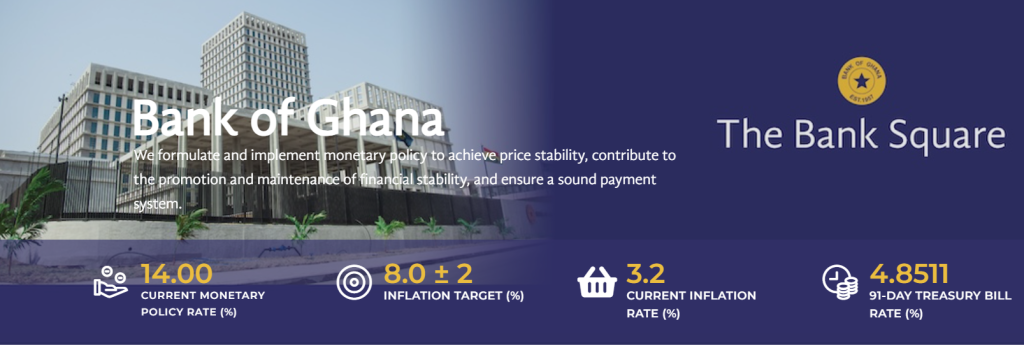
For you, the foreign worker, this means the BoG acts as the “guardian of the Cedi.” Through its Monetary Policy Committee (MPC), the bank adjusts interest rates to control inflation. When you read news about the “Policy Rate,” remember that this figure influences the interest you earn on savings and the cost of any local credit facilities you might seek.
Key Takeaway for Expats:
The BoG is the ultimate regulator. If a financial institution—be it a bank, a microfinance company, or a fintech app—operates in Ghana, it must answer to the BoG. Always verify the license of your financial provider on the BoG’s official list of licensed institutions.
2. Foreign Exchange Controls: What You Can and Cannot Do
Perhaps the most critical area for foreign workers is the Foreign Exchange Act, 2006 (Act 723). Ghana has specific rules regarding the movement of “hard currency” (USD, EUR, GBP).
Foreign Currency Accounts (FCA) vs. Foreign Exchange Accounts (FEA)
As a foreigner, you will likely open one of two types of accounts:
- Foreign Currency Account (FCA): Funded by foreign currency brought from abroad (e.g., your savings or a transfer from your home country). This money is usually freely repatriable.
- Foreign Exchange Account (FEA): Funded by foreign exchange generated within Ghana (e.g., a salary paid in USD by a local company).
The BoG regulates how much cash you can withdraw and how much you can transfer abroad without additional documentation. As of 2026, the BoG requires strict “Proof of Source” for large transfers to prevent money laundering.
Pro-Tip: Always keep your pay slips and employment contracts handy. Your local bank will require these to facilitate any outward remittances of your salary.
3. Financial Stability and the “Clean-Up” Legacy
Between 2017 and 2019, the Bank of Ghana undertook a massive “Banking Sector Clean-up,” revoking the licenses of several insolvent banks and microfinance institutions. This was done to ensure that the remaining banks are robust and well-capitalized.
Today, the Ghanaian banking sector is one of the most strictly regulated in sub-Saharan Africa. The BoG utilizes a Risk-Based Supervision (RBS) framework. For a foreign worker, this provides peace of mind: the bank holding your deposit is subject to rigorous stress tests and capital adequacy requirements.
4. The Digital Revolution: eCedi and Fintech
Ghana is a leader in mobile money. If you’ve spent five minutes in Accra, you’ve likely heard of “MoMo.” The Bank of Ghana regulates this through its Office of FinTech and Innovation.
The eCedi
The BoG is currently piloting the eCedi, a Central Bank Digital Currency (CBDC). Unlike volatile cryptocurrencies, the eCedi is a digital version of the physical Cedi, backed by the central bank. For foreigners, this promises:
- Faster local payments.
- Lower transaction fees.
- Enhanced transparency.
While the full rollout is ongoing, the BoG’s proactive stance on fintech ensures that your digital transactions are legally protected under the Payment Systems and Services Act, 2019 (Act 987).
5. AML/CFT: Why the “KYC” is So Strict
You might find that opening a bank account in Ghana requires more paperwork than in your home country. You will need your passport, your Ghana Card (the national ID, which is mandatory for all residents), proof of address, and often a reference.
This is because the BoG adheres strictly to Anti-Money Laundering and Countering the Financing of Terrorism (AML/CFT) standards set by the Financial Action Task Force (FATF). Ghana’s commitment to these standards ensures the country remains off “grey lists,” making it easier for you to connect your Ghanaian financial life with the global banking system.
6. Actionable Advice for Foreign Workers in Ghana
To ensure a smooth financial experience, follow these steps recommended by financial experts:
- Get Your Ghana Card Early: You cannot perform significant banking or mobile money transactions without it. It is the primary KYC document recognized by the BoG.
- Use Licensed Forex Bureaus: Avoid “black market” currency exchangers on the street. Not only is it illegal, but the BoG also warns that these transactions are not protected if you receive counterfeit notes.
- Understand the Tax Link: The BoG works closely with the Ghana Revenue Authority (GRA). Ensure your taxes are withheld at the source by your employer, as tax clearance is often a prerequisite for large-scale fund repatriation.
- Monitor the MPC Press Releases: Follow the BoG’s News Section to stay updated on interest rate changes. This will help you decide when to keep money in Cedi-denominated high-interest accounts versus your home currency.
7. The Pan-African Connection: PAPSS
If your work involves regional travel or business across Africa, you should know about the Pan-African Payment and Settlement System (PAPSS), a project the BoG heavily supports. This system allows you to pay for goods and services in Ghanaian Cedis while the recipient in Nigeria or Kenya receives their local currency instantly. It is a game-changer for intra-African trade and expatriate mobility.
A Partner in Your Prosperity
The Bank of Ghana is not just a government building in the heart of Accra; it is a sophisticated regulator that ensures the money you earn and save is protected. By maintaining a stable exchange rate environment, regulating the fintech boom, and enforcing international banking standards, the BoG provides the “financial safety net” that allows foreign professionals to thrive.
Main Takeaways:
- Always use BoG-licensed institutions.
- Understand the difference between FCA and FEA accounts for your salary.
- The Ghana Card is your key to the financial system.
- The BoG is leading Africa in digital currency and fintech regulation.
What has been your experience with banking in Ghana? Do you have questions about moving funds internationally? Let us know in the comments below, or share this guide with a colleague moving to the Gold Coast!
Book a call with us if you need any support in expanding into Ghana or any country in West Africa.