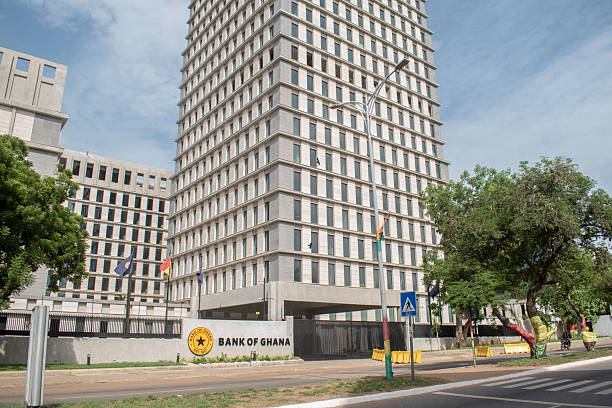
Banking in Ghana: For decades, banking in West Africa was often viewed through a lens of skepticism—characterized by long queues, manual ledgers, and a “cash-is-king” culture. But as we step into the second quarter of 2026, the narrative has fundamentally shifted. Ghana has emerged from a period of intense macroeconomic restructuring to become a digital-first financial hub.
Whether you are a local entrepreneur looking to scale, a foreign professional navigating your first offshore payroll, or an investor seeking the legendary high yields of Ghanaian Treasury Bills, the question remains: How do you navigate a system that is simultaneously traditional and cutting-edge?
This guide serves as your definitive roadmap to banking in Ghana. We will explore the regulatory backbone of the Bank of Ghana, the resilience of the universal banking sector, the “super-app” revolution in fintech, and practical strategies for financial success in one of Africa’s most dynamic economies.
1. The Regulator: Understanding the Bank of Ghana (BoG)
Every transaction you make in Ghana—from a 5-Cedi street purchase via Mobile Money to a multi-million Cedi corporate transfer—is governed by the Bank of Ghana (BoG). Established in 1957, the BoG’s mandate is price stability and the promotion of economic growth.
The Monetary Policy Committee (MPC)
As a resident or investor, you must keep an eye on the MPC. Every two months, this committee meets to set the Policy Rate. In 2026, as inflation has stabilized following the post-2023 recovery, the policy rate acts as the “North Star” for all interest rates in the country. When the BoG raises the rate, borrowing costs go up, but savings returns often follow.
The “Banking Cleanup” Legacy
You cannot understand modern Ghanaian banking without acknowledging the 2017–2019 sector reforms. The BoG revoked the licenses of several insolvent institutions, consolidated others, and raised the minimum capital requirement to 400 million GHS.
The Result: The 23 universal banks operating in 2026 are significantly more liquid, better capitalized, and subject to world-class “Risk-Based Supervision.” Your deposits are safer today than at any point in Ghana’s history.
2. The Landscape: Universal Banks vs. The Rest
Ghana’s banking structure is tiered to ensure that even the most remote farmer has access to credit.
Tier 1: Universal Banks
These are the heavyweights. They offer everything from retail savings to complex investment banking and trade finance.
Top Performers (2026): Names like Ecobank Ghana, GCB Bank, Stanbic Bank, Zenith Bank, and ABSA consistently lead in asset size and digital innovation.
Best for: International transfers, corporate payroll, and high-security wealth management.
Tier 2 & 3: Rural and Community Banks (RCBs) and Savings & Loans
If you are doing business in the “hinterlands”—perhaps in the cocoa-rich Western North or the industrial hubs of Bono—RCBs are essential. They focus on micro-credit and local community development.
Banking in Ghana
Feature
Universal Banks
Rural Banks
Fintech/Mobile Money
Primary Focus
Corporate & Retail
Agriculture & Small Trade
P2P & Micropayments
Accessibility
Urban Centers/Apps
Rural Communities
Everywhere (USSD)
Regulation
BoG (Strict)
BoG (Specialized)
BoG (Fintech Office)
3. The Digital Revolution: Mobile Money and the “Cash-Lite” Agenda
In 2026, Ghana is a global leader in mobile money (MoMo) penetration. What started as a simple way to send airtime has evolved into a $270 billion ecosystem.
The Rise of “Super Apps”
Traditional banking apps and mobile money wallets (like MTN MoMo, Telecel Cash, and AT Money) have converged. You can now:
Bank-to-Wallet Transfers: Instantly move money from your Fidelity Bank account to your MoMo wallet.
Micro-Loans: Access “Quick Loans” directly from your phone based on your transaction history—no collateral required.
Cross-Border Payments: Through the Pan-African Payment and Settlement System (PAPSS), you can now send Cedis to a vendor in Nigeria, who receives it in Naira instantly.
The eCedi: Africa’s First CBDC
The BoG’s pilot of the eCedi has transitioned into full-scale implementation. Unlike Bitcoin, the eCedi is a stable, digital version of the physical Cedi. It’s designed to work offline, meaning you can make payments in areas with no internet—a massive win for financial inclusion.
4. Investing in Ghana: Where to Put Your Money?
Ghana is famous for its high-interest environment. While the “Global Debt Exchange” of previous years required a reset, 2026 presents new, more sustainable opportunities.
Treasury Bills (T-Bills)
The government’s primary way of borrowing from the public.
91-Day, 182-Day, and 364-Day Bills: These are virtually risk-free. In 2026, yields remain attractive, often outperforming inflation and providing a “safe haven” for local currency savings.
How to Buy: You can now buy T-Bills via your mobile banking app or USSD codes (e.g., *170# for MTN users).
Fixed Deposits and Mutual Funds
Most Tier 1 banks offer Fixed Deposits where you lock your money for 6–12 months. However, many savvy Ghanaians are moving toward Mutual Funds managed by licensed investment firms, which often offer slightly higher returns by diversifying into corporate bonds and equities. Banking in Ghana
5. The Expat & Foreign Worker Guide: Banking without Borders
If you are a foreign national working in Ghana, banking can feel like a maze of “KYC” (Know Your Customer) requirements.
Opening an Account: The Checklist
To open a personal or corporate account in 2026, you generally need:
The Ghana Card: This is non-negotiable. It is the primary ID for all financial transactions.
Proof of Residence: A utility bill or a tenancy agreement.
Work/Residence Permit: Proof that you are legally allowed to earn in Ghana.
Reference Letter: Some banks still require a letter from your home bank or a current account holder in Ghana.
Foreign Currency Accounts (FCA) vs. Foreign Exchange Accounts (FEA)
FCA: For money brought from abroad. Usually freely repatriable.
FEA: For foreign currency earned within Ghana (like a USD-denominated salary).
Strategic Tip: If your salary is paid in USD, keep it in an FEA. Ghana’s exchange rate can be volatile; keeping your “hard currency” protected while only converting what you need for daily Cedi expenses is the gold standard for expat financial management.
6. Supporting SMEs: The Role of Strategic Consulting
Scaling a business in Ghana requires more than just a bank account. High lending rates (often 25%+) mean that SMEs must be “investor-ready” to secure affordable capital.
This is where entities like GroConsult Management Consortium become invaluable. They bridge the gap between a business owner’s vision and a bank’s rigid requirements. GroConsult helps SMEs with:
Payroll Management: Ensuring all SSNIT and tax obligations are met so the bank sees a compliant, low-risk business.
Audit and Assurance: Providing the financial statements that Tier 1 banks demand before approving credit lines.
AfCFTA Strategy: Helping businesses structure their finances to export across the continent, utilizing BoG-regulated trade finance instruments.
7. Common Challenges and How to Solve Them
Challenge 1: High Lending Rates
Solution: Avoid “emergency” bank loans. Instead, look for Development Finance Institutions (DFIs) like the Development Bank Ghana (DBG), which provides long-term, lower-interest funding through participating commercial banks.
Solution: Diversify. Use a mix of Cedi-denominated T-Bills (for high yield) and USD-denominated accounts (for value preservation).
Challenge 3: Fraud and Cybersecurity
Solution: Never share your MoMo PIN. In 2026, the BoG has implemented “Two-Factor Authentication” (2FA) for all digital transfers over 5,000 GHS. Embrace these security layers.
8. The Future: Banking in 2027 and Beyond
Looking ahead, we expect:
AI-Driven Credit Scoring: Your MoMo transaction history will replace traditional collateral for small loans.
Green Finance: Banks will offer lower rates for businesses that can prove environmental sustainability (ESG).
Interoperability: Total seamlessness between all African central banks, making “International Transfers” within Africa as easy as sending a text.
Take Command of Your Finances
Banking in Ghana is no longer a passive activity; it is a strategic one. By understanding the Bank of Ghana’s regulations, leveraging the power of “Super Apps,” and ensuring your compliance through partners like GroConsult, you can turn the Ghanaian financial system into a powerful engine for your personal and professional growth.
Your Next Steps:
Check your Compliance: Ensure your Ghana Card is linked to all your accounts.
Explore Investment: Look at the latest 91-Day T-Bill rates on the BoG.
Scale Up: If you’re a business owner, reach out to a management consortium to audit your readiness for global expansion.
What’s your biggest banking “win” or “woe” in Ghana? Share your story in the comments below, and let’s build a more financially literate Ghana together!